 Reviews

 Proudly American
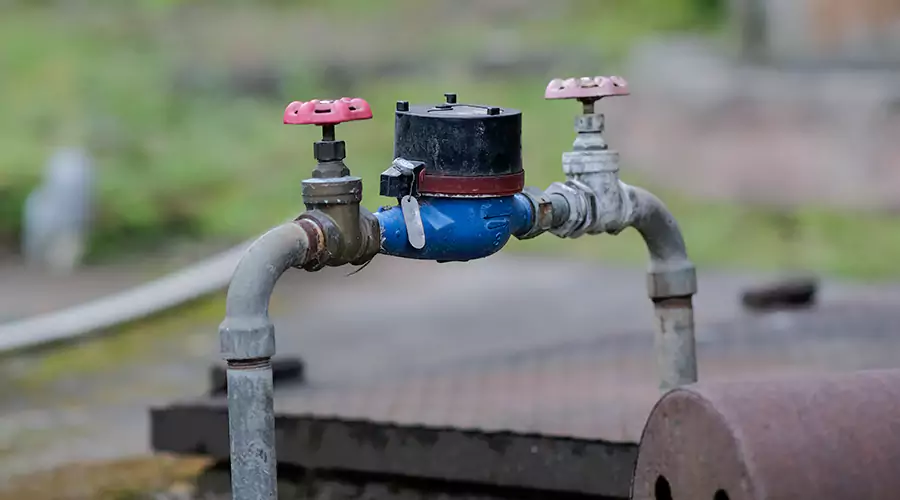
A burst pipe, leaking water heater, or overflowing toilet can cause expensive damage in minutes. Knowing where your main water shutoff valve is (and how to turn it off) lets you stop the water fast, before a small leak becomes a big repair. Here’s a practical guide to finding it in most homes.
What Is the Main Water Shutoff Valve?
The main shutoff valve controls the water coming from the city supply (or a well) into your home. Turning it off stops water to every fixture and appliance, sinks, showers, toilets, dishwashers, washing machines, and usually outdoor hose bibs.
Main Shutoff vs. Fixture Shutoffs
- Main shutoff: Stops water to the entire home.
- Fixture shutoffs: Small valves under sinks, behind toilets, or near appliances.
If you’re not sure where a leak is coming from, use the main shutoff.
Where the Main Water Shutoff Valve Is Usually Located?
Most homes have an indoor main shutoff near where the water line enters the building. Many also have a backup shutoff near the meter or at the curb.
1) Inside the Home (Most Common)
Start at the lowest level and look along perimeter walls, especially the side facing the street. Typical spots:
- Basement: On the front foundation wall near the pipe entry
- Crawl space: On the pipe coming through the foundation, close to the access opening
- Utility room / mechanical closet: Near the water heater or laundry
- Garage: Common in slab-on-grade homes, often on a shared interior wall
What you’re looking for: a larger pipe (often 3/4" to 1") entering through a wall or floor, with a valve attached.
2) Near the Water Meter
If your meter is indoors, the shutoff may be right before or after it. If the meter is outside, look for an in-ground meter box near the curb/sidewalk or property line.
3) At the Street (Curb Stop / Curb Valve)
Many properties have a street-side shutoff in or near the meter box by the curb, sometimes requiring a long “curb key.” Some utilities prefer homeowners don’t operate it, so treat it as a backup option.
How to Identify the Valve Type?
Main shutoffs are usually one of these:
- Gate Valve (Wheel Handle)
- Round wheel handle
- Multiple turns to close
- Common in older homes, more likely to seize with age
- Ball Valve (Lever Handle)
- Straight lever handle
- Quarter-turn to open/close
- Generally more reliable and easier to use
Lever rule: handle parallel to the pipe = ON; perpendicular = OFF.
How to Find It Fast in 4 Steps?
Step 1: Start at the Lowest Level
Basement or crawl space first. Walk the perimeter and scan for the main pipe entering the home.
Step 2: Use the Water Heater as a Clue
Find the cold-water line feeding the water heater and trace it back. It often leads toward the entry point.
Step 3: Look for the Meter or Regulator
Meters have a dial or digital readout. A pressure regulator is often bell-shaped. The main shutoff is frequently close to one of these.
Step 4: If You’re on a Slab, Check Plumbing “Hubs”
No basement? Check the garage, laundry room, or utility closet. Still no luck? Walk to the curb and locate the water meter box.
What to Do After You Find It?
Do these quick, high-impact steps:
- Label it (“MAIN WATER SHUTOFF”) for emergencies
- Keep it reachable (don’t block it with storage)
- Test it gently once or twice a year (off → on) so it doesn’t stick
How to Shut Off Water Safely?
- Turn the valve to OFF (clockwise for a wheel; 90° for a lever).
- Open a faucet on the lowest level to relieve pressure.
- If water will be off for a while, avoid running hot-water appliances until water is restored.
If You Can’t Find It (Or It Won’t Turn)
Can’t find it?
- Check your inspection report or move-in paperwork.
- Ask your water utility where the meter/curb stop is, or ask building management for unit shutoff info.
Won’t turn or looks damaged?
- Don’t force it, old valves can break and leak. Call a licensed plumber to service/replace it, and consider upgrading an aging gate valve to a ball valve.
FAQs
Does the main shutoff stop outdoor faucets too?
Usually yes, unless you have a separate irrigation line.
Apartments and condos?
Some units have a dedicated shutoff; others require building management to shut water off. Find out ahead of time.
Final Tip
Once you’ve found the valve, take a photo and save it. In an emergency, that 10-second reference can save a lot of stress, and a lot of water damage.